Home Blog Page 47

INDIA Bloc Unites: March 31 Mega Rally to Defend Democracy

0

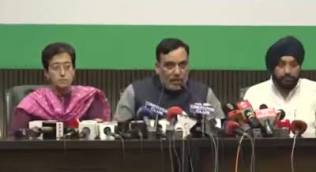
On March 31, Delhi Minister and Aam Aadmi Party (AAP) leader Gopal Rai declared that the opposition ‘INDIA’ bloc is set to host a massive rally in Delhi. This announcement comes amidst the escalating confrontation between the opposition and the Narendra Modi government following the arrest of Delhi Chief Minister Arvind Kejriwal by the Enforcement Directorate in the excise policy case.

Rai expressed, “The arrest of Delhi CM Arvind Kejriwal has stirred indignation among all those who cherish and uphold the constitution nationwide. It’s not just about Kejriwal; it seems like a systematic attempt to dismantle the entire opposition.”

He further accused Prime Minister Modi of misusing central agencies and manipulating legislators. “PM Modi is resorting to tactics like buying MLAs or intimidating them to join BJP. Those who resist are being targeted with fabricated charges,” Rai asserted.

Delhi Minister Saurabh Bharadwaj highlighted the symbolic significance of Ramlila Maidan, where the rally is scheduled to take place. “Ramlila Maidan has been witness to pivotal moments in our nation’s history. It’s where AAP emerged, and now it will serve as the platform for the unity of all INDIA parties,” Bharadwaj stated.

Arvinder Singh Lovely, Delhi Congress chief, emphasized the rally’s broader purpose. “Democracy is under threat, and our leader Rahul Gandhi is leading the fight to protect it. We stand firmly with our partners in the INDIA alliance,” he declared. “The ‘maha rally’ on March 31 isn’t merely about politics; it’s a rallying cry to safeguard our democracy and challenge the BJP-led government at the center,” Lovely concluded.


Delhi High Court Declines Interim Protection to Arvind Kejriwal in Money Laundering Case

Legal Battle Unfolds as Chief Minister’s Plea Challenging Summons Faces Scrutiny

The Delhi High Court declined to issue interim protection from coercive action to Chief Minister Arvind Kejriwal in the money laundering case linked to the alleged liquor policy case. A division bench comprising Justice Suresh Kumar Kait and Justice Manoj Jain stated that they were not inclined to pass any order at this stage after hearing arguments from both sides.

However, the bench allowed the Enforcement Directorate (ED) to respond to Kejriwal’s application seeking interim relief, part of his petition challenging the summons issued by the central probe agency. Senior Advocate Abhishek Manu Singhvi represented Kejriwal, while ASG SV Raju along with special counsel Zoheb Hossain represented the ED. The court had previously sought the ED’s response on the maintainability of Kejriwal’s plea challenging the summons.

During the hearing, Singhvi argued that the ED’s actions were creating an unfair playing field, particularly with elections approaching. He criticized the summons for lacking clarity on why Kejriwal was required to appear physically. Singhvi emphasized that the ED must justify any arrest, rather than exercising power arbitrarily. He characterized the ED’s actions as motivated by the upcoming elections.

In opposition, Raju argued against granting interim relief, asserting that Kejriwal must adhere to the law like any other individual. He clarified that Kejriwal was summoned in his personal capacity, not as Chief Minister or Aam Aadmi Party Chief. Raju emphasized the principle of equality before the law.

Overall, the court declined to grant interim protection to Kejriwal at this stage but allowed the ED to respond to his plea.

Unraveling the Flipkart Saga: The iPhone Order Cancellation Controversy

Navigating Consumer Disputes: The Flipkart iPhone Order Cancellation Controversy

Flipkart, the e-commerce giant, has been directed by a consumer disputes redressal panel in Mumbai to compensate a customer with ₹10,000 for the mental anguish endured following the cancellation of his iPhone order. The District Consumer Disputes Redressal Commission deemed Flipkart’s cancellation as ‘intentional,’ viewing it as a means to generate additional profit, thereby constituting a deficiency in service and unfair trade practice.

Although the customer received a refund, the panel acknowledged the mental distress caused by the unilateral cancellation. The complainant cited not only financial loss but also mental harassment and susceptibility to online fraud. However, the commission dismissed Ekart Logistics, Flipkart’s delivery partner, from the complaint, emphasizing the lack of direct consumer-service provider relationship.

Flipkart countered the allegations, asserting that the complainant mistakenly attributed the delivery partner as the seller. Emphasizing its role as an intermediary, Flipkart clarified that it facilitates transactions between independent third-party sellers and consumers. The seller in question, International Value Retail Private Limited, bore sole responsibility for the transaction, according to Flipkart.

Furthermore, Flipkart claimed to have relayed the complainant’s concerns to the seller, who indicated unsuccessful delivery attempts due to the complainant’s unavailability, leading to the order cancellation. With the refund processed, Flipkart asserted that the dispute solely pertained to the complainant and the seller, absolving it of any liability.

In essence, while the financial aspect has been resolved through the refund, the dispute remains between the customer and the seller, leaving Flipkart free of any legal obligation in the matter.

Unveiling Allegations: The Elvish Yadav Controversy – From Snake Venom to Physical Altercations

0

Unraveling Allegations and Controversies Surrounding Elvish Yadav: A Closer Look at the Snake Venom Case and Beyond

Elvish Yadav’s recent arrest by the Noida Police has stirred significant attention, particularly in connection with allegations related to the supply and use of snake venom at rave parties. Alongside six others, including Elvish, he was booked under the Wildlife (Protection) Act and Section 120A of the Indian Penal Code, accused of involvement in providing snake venom for a party in Noida’s Sector 51. The sting operation conducted by Maneka Gandhi’s People for Animals aimed to expose the misuse of rare animals, and Elvish Yadav’s alleged network in this regard drew suspicion. While Elvish refuted all allegations during questioning, the investigation persisted into his purported role in procuring snakes for such events.
The sequence of events traces back to a rave party held on November 3 the previous year in Noida Sector 51, where snakes were discovered with their venom glands removed, indicating potential exploitation. Notably, Elvish was not physically present at the party. However, his association with snakes, evident in his online content, and alleged facilitation of contacts involved in procuring snake venom, fueled suspicions against him.
Adding to the controversy, Elvish Yadav found himself embroiled in another contentious incident involving a physical altercation with fellow YouTuber Maxtern, also known as Sagar Thakur. This altercation garnered widespread attention after a video depicting the altercation went viral, resulting in an FIR filed against Elvish in Gurugram. In response, Elvish issued a statement detailing the circumstances leading to the confrontation.
As the legal proceedings unfold and investigations continue, the controversies surrounding Elvish Yadav underscore broader concerns regarding wildlife protection and responsible online conduct.

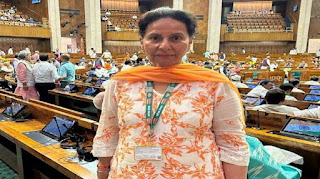
Preneet Kaur Joins BJP After Congress Suspension

Preneet Kaur’s Political Shift: From Congress Suspension to Joining BJP

Preneet Kaur, the suspended Congress MP from Patiala, officially joined the Bharatiya Janata Party (BJP) on March 14, signaling a significant political shift ahead of the upcoming Lok Sabha Elections.

Facing suspension from the Congress party due to allegations of working against its interests, Preneet openly aligned herself with the BJP in her stronghold of Patiala.

The suspension from Congress came in February 2023, following accusations of engaging in activities contrary to the party’s directives. These allegations were raised by Punjab Congress leader Amarinder Raja Warring, who accused her of supporting the BJP within Punjab.

Preneet’s distancing from the Congress activities can be traced back to her husband’s removal from the chief ministerial post in 2021.

Government Takes Action Against OTT Platforms for Obscene Content

The Ministry of Information & Broadcasting (I&B), in coordination with various intermediaries, has taken decisive action to block 18 OTT platforms due to concerns over the dissemination of “obscene,” “vulgar,” and, in some cases, “pornographic” content.

An official statement from the Ministry announced the disabling of 19 websites, 10 apps (7 on Google Play Store and 3 on Apple App Store), and 57 associated social media accounts, preventing public access in India. Union Minister for Information & Broadcasting Anurag Singh Thakur reiterated the responsibility of platforms to refrain from propagating obscenity, vulgarity, and abuse under the guise of ‘creative expression.’

The decision, announced on March 12, was executed under the provisions of the Information Technology Act, 2000, in consultation with various governmental ministries and domain experts specializing in media, entertainment, women’s rights, and child rights.

The content hosted on these platforms was found to be offensive, portraying women in a demeaning manner, depicting nudity, sexual acts, and inappropriate contexts such as relationships between teachers and students or incestuous family relationships. Such content was deemed in violation of Sections 67 and 67A of the IT Act, Section 292 of the IPC, and Section 4 of the Indecent Representation of Women (Prohibition) Act, 1986.

Some of the blocked OTT apps had garnered substantial downloads, with one surpassing 1 crore downloads and two others exceeding 50 lakh downloads on the Google Play Store. Additionally, these platforms heavily utilized social media for promotion, with the cumulative followership of their accounts exceeding 32 lakh users.

The Ministry stated its ongoing efforts to sensitize OTT platforms through meetings, webinars, workshops, etc., in collaboration with their self-regulatory bodies established under the IT Rules, 2021.

While emphasizing the commitment to fostering the growth of the OTT industry, the Government of India highlighted various measures undertaken, including the introduction of the Inaugural OTT Award for Web Series at the 54th International Film Festival of India and collaboration with OTT platforms in the media and entertainment sector. Additionally, the establishment of a light-touch regulatory framework with an emphasis on self-regulation under the IT Rules, 2021, has been emphasized.

Congress Unveils ‘Nari Nyay Guarantee’ and Electoral Promises for Women Empowerment

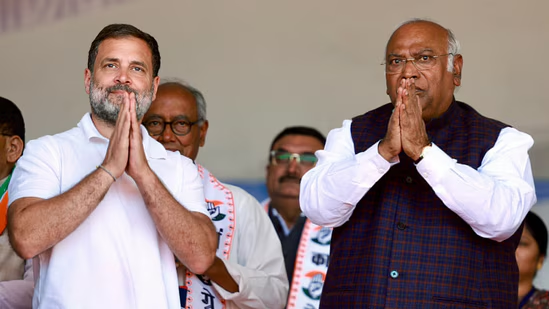
Congress President Kharge Unveils “Nari Nyay Guarantee” for Women Empowerment

In a bid to appeal to women voters, the Congress party has introduced its ambitious “Nari Nyay
Guarantee,” promising financial aid of ₹1 lakh annually to women from economically disadvantaged backgrounds. This initiative encompasses five key components: ‘Mahalaxmi,’ ‘Aadhi Aabadi Poora Haq,’ ‘Shakti Ka Sammaan,’ ‘Adhikar Maitri,’ and ‘Savitribai Phule Hostel.’

Under the “Aadhi Aabadi Poora Haq” initiative, women will secure rights to half of all new recruitments at the central government level, as stated by Congress President Mallikarjun Kharge in a video message. Additionally, “Shakti Ka Sammaan” aims to double the central government’s contribution to the monthly income of Anganwadi, ASHA, and midday meal workers.

To foster awareness of women’s rights, Congress plans to deploy paralegal professionals in every panchayat, tasked with educating and assisting women in navigating legal frameworks effectively, Kharge elaborated.

Furthermore, the party pledges to address the pressing need for safe and affordable accommodation for working women by constructing at least one hostel for them at every district headquarters.

Kharge emphasized the party’s track record of fulfilling promises since its inception in 1926, contrasting it with the birth of its opponents. He underscored the commitment of the Congress to uphold democracy and the Constitution, urging supporters to strengthen the party’s resolve.

In a separate development, Congress leader Rahul Gandhi recently outlined five major electoral promises targeting young voters. These include ensuring apprenticeships for all degree/diploma holders with a stipend of ₹1 lakh per year and filling 30 lakh vacant positions in the central government within a specified timeline.

Gandhi highlighted the success of initiatives like MNREGA and expressed confidence that the proposed schemes would similarly benefit the populace.

Electoral Buzz: BJP Candidate Dynamics and Pawan Singh’s Foray into Politics

BJP Candidate Lineup and Election Excitement: Pawan Singh’s Entry and Speculations on Potential Contenders

Pawan Singh, a Bhojpuri singer-turned-actor hailing from Bihar, has declared his intention to contest the upcoming Lok Sabha elections, citing a commitment to fulfill promises to his society, the public, and his mother. This announcement comes shortly after he declined a ticket from the Bharatiya Janata Party (BJP). Interestingly, Singh will be contesting from Asansol, where the incumbent MP is another Bollywood actor and TMC member, Shatrughan Sinha.

In the backdrop of Singh’s decision, the BJP gears up for the elections with potential candidates emerging. Speculations suggest names like Basavraj Bommai and Shobha Karandajale from Karnataka, Nitin Gadkari from Maharashtra, and Anurag Thakur from Himachal Pradesh could feature in the party’s second list. However, there are indications that prominent figures such as Anant Hedge, Pratap Simha, and Poonam Mahajan might not make it to the final list.

As the election fervor intensifies,
With a comprehensive lineup covering 21 states, 518 constituencies, and over one lakh respondents, alongside in-person interviews, the poll aims to provide insights into the political landscape ahead of the elections.

Political Shake-up: Haryana Chief Minister Resigns Amid Alliance Dispute

Political Turmoil in Haryana: Chief Minister Resigns Amid Alliance Rift

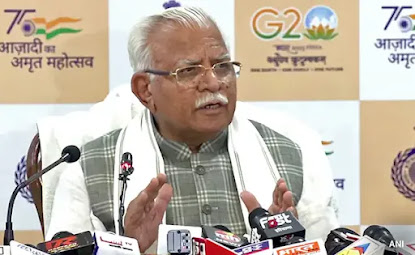
Haryana Chief Minister Manohar Lal Khattar tendered his resignation on Tuesday morning after meeting with Governor Bandaru Dattareya. The move, accompanied by the resignation of his entire cabinet, follows speculation of a fracture within the ruling BJP-JJP alliance regarding seat-sharing for the upcoming Lok Sabha election.

Both the BJP and the JJP, led by Dushyant Chautala, have announced their intentions to contest the forthcoming polls independently. In the 2019 elections, the BJP secured all 10 seats in the state, while the JJP, a newly formed party at the time, contested seven seats but garnered a notable vote share of 4.9 percent.

During the 2019 Assembly election, the JJP clinched 10 seats, crucial for the BJP, which fell short of a majority with 40 seats in the 90-member House. A post-poll agreement between the two parties resulted in the formation of the government.

Speculation is rife that Manohar Lal Khattar may vie for a Lok Sabha seat, possibly Karnal, presently held by the BJP’s Sanjay Bhatia. Conversely, sources suggest Bhatia might transition from Parliament to the Haryana Assembly to assume the role of Chief Minister.

Alternatively, there are murmurs of Khattar’s potential return as Chief Minister, leading a government backed by independent MLAs. This administration may feature two Deputy Chief Ministers from different communities, aligning with the BJP’s strategy to diversify representation ahead of the Lok Sabha election, akin to its approach in Madhya Pradesh, Rajasthan, and Chhattisgarh after the Assembly elections last November.

Reports indicate that five JJP MLAs—Jogi Ram Sihag, Ram Kumar Gautam, Ishwar Singh, Ramniwas, and Devinder Babli—could defect and join the BJP, possibly forming a breakaway faction to bolster the new BJP-led government.

Supreme Court Orders SBI: Disclose Electoral Bond Details by March 12

0

Supreme Court Orders SBI to Disclose Electoral Bond Details by March 12

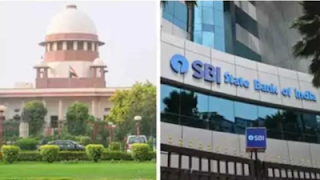
The Supreme Court has directed the State Bank of India (SBI) to reveal the particulars of electoral bonds cashed by political parties to the Election Commission by March 12, issuing a warning of potential consequences for ‘wilful disobedience’ if the deadline is not met. Despite SBI’s request for an extension until June 30, the court rejected the plea.

Moreover, the court has mandated the Election Commission to publish the disclosed information on its official website by March 15. The five-judge constitution bench, headed by Chief Justice D Y Chandrachud and including Justices Sanjiv Khanna, B R Gavai, J B Pardiwala, and Manoj Misra, issued this directive.

Earlier, on February 15, the same bench had deemed the Centre’s electoral bonds scheme “unconstitutional” and instructed the EC to unveil donors, donation amounts, and recipients by March 13. The court also instructed SBI, the designated financial institution under the scheme, to furnish details of electoral bonds procured since April 12, 2019, to the EC by March 6.

The opposition leaders have lauded the court’s decision, anticipating transparency regarding the donors involved in political funding through electoral bonds.

SBI Faces Criticism

The Supreme Court reprimanded the State Bank of India for the delay in disclosing details about electoral bonds cashed by political parties, expressing disappointment over the lack of transparency. Chief Justice DY Chandrachud emphasized the expectation of candor from SBI, stressing the urgency of the matter.

Refusal of Extension

The five-judge Constitution bench, led by CJI Chandrachud, dismissed SBI’s plea for an extension until June 30 to furnish the details, citing the accessibility of the information. The bench directed SBI to disclose the details by March 12 and instructed the EC to publish them by March 15, cautioning SBI of potential contempt action for non-compliance.

Deadline for EC

The court mandated the Election Commission to promptly publish the information provided by SBI on its official website by March 15, underscoring the imperative of transparency in the electoral process.

SBI’s Data Compilation Challenge

During the hearing, senior advocate Harish Salve, representing SBI, mentioned that the bank had ceased issuing electoral bonds following the court’s directive but sought additional time due to the complexity of collating information from various sources. However, the apex court clarified that the requisite information was readily available to the bank, stored in separate databases, and stressed the necessity of a direct and transparent disclosure.