Home Blog Page 48

India’s Strategic Triumph: Unveiling Mission Divyastra

Empowering India’s Defense: Unveiling the Game-Changing Mission Divyastra

Prime Minister Narendra Modi has unveiled “Mission Divyastra,” heralding a significant advancement in India’s defense capabilities and strategic influence in southeast Asia. The unveiling marks the debut flight of the Agni-5 MIRV missile, developed over a decade by the Defense Research and Development Organisation (DRDO).

The innovative MIRV technology enables a single missile to deploy multiple warheads, striking targets simultaneously—an exclusive capability possessed by only a handful of nations including the US, UK, Russia, France, and China. With this successful test, India joins this prestigious club, affirming its prowess in defense technology.

Prime Minister Modi commended DRDO scientists for achieving this milestone, hailing the Agni-5 missile with MIRV technology as a testament to India’s self-reliance and technological prowess.

President Droupadi Murmu lauded the achievement as a pivotal moment in India’s journey toward greater strategic autonomy and applauded DRDO for its contribution to national defense.

Dr. V K Saraswat, a key figure in the Agni-5 project, emphasized its significance as a “huge force multiplier,” particularly in complementing India’s no-first-use policy. He underscored the importance of a robust second-strike capability, now attained through Mission Divyastra.

The Agni-5’s MIRV payload empowers India to target adversaries in multiple directions within a 5,000-plus km radius, enhancing national security. Equipped with indigenous avionics and high-precision sensor packages, the system ensures accurate targeting, reinforcing India’s defensive capabilities.

The project, spearheaded by a yet undisclosed woman leader, showcases India’s commitment to gender-inclusive excellence in defense technology.

Agni missiles have been integral to India’s defense arsenal since the 1990s, with Agni-5’s enhanced capabilities marking a significant leap in second-strike capability, capable of targeting moving objects such as ships with advanced seeker technology.

The successful test flight of Mission Divyastra underscores India’s commitment to technological advancement and self-reliance in defense, bolstering its position as a regional leader in defense innovation and strategy.

Digitalizing Citizenship: CAA Application Process Goes Online

0

The Ministry of Home Affairs has officially announced the implementation of the Citizenship Amendment Act (CAA) by notifying its rules today. The CAA’s rules, termed as the Citizenship (Amendment) Rules, 2024, have been introduced to facilitate the process of granting Indian citizenship to eligible individuals under the CAA-2019. The law primarily targets Hindu, Sikh, Jain, Buddhist, Christian, and Parsi refugees from Afghanistan, Bangladesh, and Pakistan, making it easier for them to acquire Indian citizenship.

In a statement released via the official handle of the Ministry’s spokesperson, it was emphasized that applications for citizenship will be exclusively submitted through an online portal. This development follows Union Home Minister Amit Shah’s prior declaration that the law would be enforced ahead of the Lok Sabha elections.

The CAA, enacted in 2019, aims to offer citizenship to non-Muslim migrants from the aforementioned countries who arrived in India before December 31, 2014. Its passage ignited widespread protests across various regions of the country.

Addressing concerns and criticisms, Amit Shah reiterated that the CAA is a commitment of the nation, emphasizing that it does not revoke anyone’s citizenship. He clarified that the law is designed to extend citizenship to refugees who faced persecution in Bangladesh and Pakistan, echoing assurances provided by the Congress government in the past.

However, West Bengal Chief Minister and Trinamool Congress leader Mamata Banerjee firmly declared her government’s stance against the implementation of CAA and the National Register of Citizens (NRC) in the state. She denounced attempts to sow division among communities and criticized the unequal attention given to various regions in addressing such issues.

The unfolding of events surrounding the implementation of the CAA continues to draw attention and debate across the political spectrum.

[Source: Adapted from inputs by ANI, PTI]

Breaking News: Hacktivist Vanguard Hacked Several Bangladeshi Educational Websites

0

Bangladeshi Educational Websites Hacked in Response to Indian Hacking Attempts

The hacktivist collective known as “Hacktivist Vanguard” has launched a series of cyber attacks targeting several educational websites in Bangladesh. Among the institutions affected are Aldhun High School, Edu Info Bangladesh, Palashbari High School, AIAMR High School, ND Madrasah, Azam College, Dhopaghata Akhil Shiksha Kendro, Chittagong High School, GWFM College, and Baratvakla College.

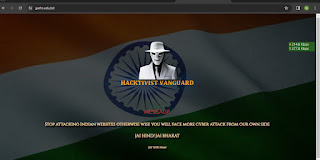
Hacktivist Vanguard’s modus operandi involves replacing the original content of these websites with their own message. This message, which includes salutations to Indian hackers and a cautionary note directed at the Bangladeshi government, serves as a stark indication of their presence and intentions.

Furthermore, Hacktivist Vanguard has extended their cyber assault to additional educational institutions, including Bodoland Model Madrasah, Ghoshnagar High School, GWFM College, and Baratvakla College, defacing their websites with identical messages.

While Hacktivist Vanguard has not explicitly articulated their motivations behind these attacks, speculation suggests a possible motive rooted in the perceived role of these educational institutions in advancing Indian interests within Bangladesh.

In response to this breach of cybersecurity, urgent measures are warranted. The Bangladeshi authorities must swiftly address this incident, securing the compromised websites and launching a thorough investigation into the matter. Moreover, bolstering cybersecurity measures across educational institutions is imperative to mitigate the risk of future breaches.

It is crucial to emphasize that the provided Proof of Concept (PoC) links are for informational purposes only and should not be accessed due to potential security risks. :

Hacktivist Vanguard Hacks Bangladeshi Educational Websites

The hacktivist group Vanguard has hacked several educational websites in Bangladesh. These websites are:
Site Name Site Link PoC
Aldhun High School https://aldhs.edu.bd/ PoC
Edu Info Bangladesh https://edu.info.bd/ PoC
Palashbari High School https://palashbarihighschool.edu.bd/ PoC
AIAMR High School https://amairhs.edu.bd/ PoC
ND Madrasah https://ndmadrasah.edu.bd/ PoC
Azam College https://azamc.edu.bd/ PoC
Dhopaghata Akhil Shiksha Kendro https://dhopaghataakhs.edu.bd/ PoC
Chittagong High School https://chscollege.edu.bd/ PoC
GWFM College https://gwfm.edu.bd/ PoC
Baratvakla College https://baratvakla.edu.bd/ PoC
Bodoland Model Madrasah https://bodm.edu.bd/ N/A
Ghoshnagar High School https://ghoshnagarhs.edu.bd/ N/A
GWFM College https://gwfm.edu.bd/ N/A
Baratvakla College https://baratvakla.edu.bd/ N/A

The hacktivist group Vanguard has defaced these websites by replacing their content with their own message. The message includes greetings to Indian hackers and a warning to the Bangladeshi government. It is believed that the hacktivist group Vanguard hacked these websites in response to some Bangladeshi kids hackers attempting to hack Indian websites and causing trouble. The Bangladeshi government should take immediate action to secure these websites and investigate the hacking incident. They should also consider implementing stronger security measures to prevent future attacks. – The Blaze Times

The Pros and Cons of Cryptocurrencies: Understanding the Risks and Rewards of Virtual Currencies By Nitin

0

Author Mr Nitin , Cryptocurrencies have gained significant attention and popularity in recent years. These digital or virtual currencies use cryptography for security and are decentralized, operating independently of a central bank. While they offer several advantages, there are also potential risks and drawbacks to consider. Here’s a look at the pros and cons of cryptocurrencies:

Pros:

Decentralization: Cryptocurrencies operate on a decentralized network, which means they are not controlled by any government or financial institution. This allows for peer-to-peer transactions without the need for intermediaries, resulting in faster and cheaper transactions.

Security: Cryptocurrencies use advanced cryptographic techniques to secure transactions and control the creation of new units. This makes them resistant to fraud and counterfeiting.

Accessibility: Cryptocurrencies can be accessed by anyone with an internet connection, making financial services more accessible to the unbanked and underbanked populations.

Privacy: Cryptocurrencies offer a higher level of privacy compared to traditional financial systems, as they do not require personal information for transactions.

Potential for high returns: Cryptocurrencies have the potential for high returns on investment, as their value can increase rapidly in a short period of time.

Cons:

Volatility: Cryptocurrencies are known for their extreme volatility, with prices fluctuating significantly in a short period of time. This makes them risky for both investors and businesses that accept them as a form of payment.

Lack of regulation: Cryptocurrencies are largely unregulated, which can make them a target for criminal activities such as money laundering and fraud.

Irreversibility of transactions: Once a transaction is confirmed, it is irreversible, which can make it difficult to rectify errors or fraudulent activities.

Complexity: Cryptocurrencies can be complex and difficult to understand, which can make them intimidating for some users.

Security risks: While cryptocurrencies themselves are secure, there are security risks associated with storing and transacting them. If a user’s digital wallet is hacked or lost, there is no way to recover the funds.

In conclusion, cryptocurrencies offer several advantages, including decentralization, security, accessibility, privacy, and potential for high returns. However, they also come with potential risks and drawbacks, such as volatility, lack of regulation, irreversibility of transactions, complexity, and security risks. It is essential to understand these pros and cons before investing in or using cryptocurrencies. As with any investment, it is important to do thorough research and consider seeking advice from a financial advisor.

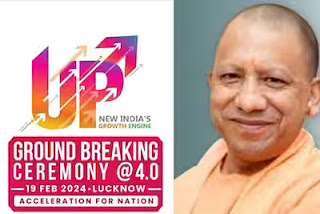
Lucknow Prepares for Grand Ground Breaking Ceremony 4.0 Inaugurated by PM Modi

0

Celebrating Tradition and Progress in the Heart of Uttar Pradesh

Lucknow, Uttar Pradesh – As anticipation builds for the upcoming Ground Breaking Ceremony (GBC) 4.0, Lucknow gears up to welcome Prime Minister Narendra Modi and esteemed guests for the three-day extravaganza commencing on February 19.

The organizing committee is sparing no effort to ensure a memorable experience for attendees, with preparations underway to showcase Uttar Pradesh’s rich cultural heritage. A total of 14 stages will line the route from Lucknow Airport to the Indira Gandhi Pratishthan (IGP), where cultural troupes comprising 350 artists will enthral spectators.

From Bollywood celebrities to local talent, the lineup promises diverse performances. Renowned playback singer Monali Thakur will grace the stage alongside Kathak maestro Birju Maharaj’s troupe, captivating audiences with melodious tunes and traditional dance dramas.

Grammy Award-winner Ricky Kej and flautist Rasika Shekhar are set to enchant the audience with their mesmerizing performances on February 20.

Local artists from various regions of Uttar Pradesh, including Mathura, Ayodhya, and Azamgarh, will showcase traditional dances such as Mayur, Faruwahi, and Kahrwa, adding to the cultural tapestry of the event.

In preparation for the influx of guests, major roads leading to the venue are being reinforced, and three temporary helipads are being constructed at La Martiniere School to facilitate smooth transportation.

Executive Engineer Manish Verma affirmed that necessary surface repairs have been undertaken on Lohiyapath, ensuring safe passage for attendees.

With meticulous planning and a lineup of captivating performances, Lucknow is poised to host a groundbreaking ceremony that celebrates both tradition and progress.

ISRO Successfully Launches Next-Generation Weather Satellite INSAT-3DS

0

ISRO’s Successful Launch of INSAT-3DS: A Leap Forward in Weather Observation Technology

India’s space agency, ISRO, achieved another milestone on Saturday with the successful launch of its next-generation weather observation satellite, INSAT-3DS. The satellite was launched aboard a GSLV rocket, marking a significant advancement in India’s space technology.

The flawless mission not only demonstrated ISRO’s prowess but also marked a turning point for the GSLV rocket technology, which has faced challenges in the past. ISRO Chairman S Somanath expressed confidence in the success, stating that it gives the agency “greater confidence” as they prepare for the upcoming NISAR mission, a collaboration with NASA.

INSAT-3DS, weighing 2274 kg, is a follow-on mission aimed at providing enhanced meteorological observations, monitoring land and ocean surfaces, weather forecasting, disaster warning, and satellite-aided Search and Rescue Services (SAR). The satellite, funded by the Ministry of Earth Sciences, will ensure continuity of services provided by its predecessors, INSAT-3D and INSAT-3DR.

The mission’s objectives include studying cloud properties, fog, rainfall, snow cover, fire, smoke, land, and ocean surfaces, among others. With improved radiometric performances, the satellite’s payloads will provide valuable data for weather and climate-related studies.

Mission Director Tomy Joseph likened the GSLV to a “naughty boy” that has now matured into an obedient and disciplined vehicle, highlighting its reliability for future missions. Somanath emphasized ISRO’s confidence in the GSLV, particularly as they prepare for the NASA-ISRO Synthetic Aperture Radar (NISAR) satellite mission.

INSAT-3DS is equipped with enhanced payloads, and its solar panels have been deployed as it embarks on its journey to its designated orbit. Over the next few days, ISRO will conduct orbit-raising maneuvers and in-orbit testing to commission the spacecraft fully.

The mission’s success is expected to benefit various departments and institutes under the Ministry of Earth Sciences, including the India Meteorological Department and the National Centre for Medium Range Weather Forecasting. The INSAT-3DS mission is anticipated to have a lifespan of around 10 years, contributing significantly to India’s meteorological and earth observation capabilities.

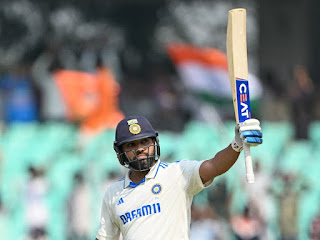
Rohit Sharma’s Stellar Century Propels India in Third Test Against England

0

Skipper’s Record-breaking Knock Sets Tone for High-Stakes Clash in Rajkot

In a commanding display of skill and resilience, Indian cricket team skipper Rohit Sharma notched up a magnificent century on the opening day of the third Test match against England in Rajkot. His masterful innings, studded with 12 fours and 2 sixes, proved pivotal for India after the early dismissals of Shubman Gill, Yashasvi Jaiswal, and Rajat Patidar. Sharma’s partnership with Ravindra Jadeja steered India’s innings back on track, setting the stage for a competitive total.

At 36 years and 291 days, Rohit Sharma’s century not only showcased his prowess but also etched his name in the record books as the oldest Indian cricket team captain to achieve a Test ton, surpassing Vijay Hazare’s previous milestone set against England in 1951. With this feat, Sharma adds another accolade to his illustrious career, already holding records in both ODIs and T20Is for India.

Opting to bat first after winning the toss, India seized the opportunity to assert their dominance on home turf. The series, deadlocked at 1-1, saw England’s captain Ben Stokes marking his 100th Test appearance, adding an extra layer of significance to the contest.

In a strategic move, India handed debuts to middle-order batter Sarfaraz Khan and young wicketkeeper batter Dhruv Jurel, while England bolstered their pace attack by bringing back Mark Wood in place of spinner Shoaib Bashir.

With both teams fielding formidable lineups, the stage is set for an enthralling battle as India seeks to capitalize on Rohit Sharma’s stellar performance to gain the upper hand in the series.

Frequently Asked Questions:

1. Who scored the century for India in the third Test against England?

– Indian cricket team skipper Rohit Sharma scored the century on the opening day of the third Test match in Rajkot against England.

2. How many boundaries did Rohit Sharma hit during his innings?

– Rohit Sharma slammed 12 fours and 2 sixes during his sublime century innings.

3. What record did Rohit Sharma break with his century?

– Rohit Sharma became the oldest Indian cricket team captain to score a Test century, surpassing the previous record held by Vijay Hazare.

4. What was the scoreline of the series between India and England before the third Test?

– The series was tied at 1-1 before the commencement of the third Test match.

5. Who made their debut for India in the third Test match?

– Middle-order batter Sarfaraz Khan and wicketkeeper batter Dhruv Jurel made their debut for India in the third Test.

6. Who replaced Shoaib Bashir in the England playing eleven?

– Pacer Mark Wood replaced young spinner Shoaib Bashir in the England playing eleven for the third Test match against India in Rajkot.

Union Ministers to Meet Farmers Amid Delhi Chalo Protest

0

Farmers’ Demands for Fair Crop Prices Gain Momentum

Union Ministers to Hold Third Round of Talks with Farmers’ Leaders Amid Stand-off at Haryana, Punjab Borders. In the ongoing Delhi Chalo protest, three Union ministers are set to engage in discussions with farmers’ leaders in Chandigarh for the third round of talks. This development comes amidst the stand-off persisting at the borders of Haryana and Punjab.

Major farmers’ unions have thrown their support behind the protesting farmer unions at Shambhu border and Khanauri border in Punjab. Notably, the Bharatiya Kisan Union (Ugrahan) and BKU Dakaunda (Dhaner faction) have announced a ‘rail roko’ (train stoppage) in Punjab on Thursday, February 15, between 12 noon and 4 pm. The Samyukt Kisan Morcha, representing 37 farm unions, has also backed the ongoing protests, with demands primarily focused on securing a minimum support price (MSP) for crops.

The involvement of these unions underscores their dissatisfaction with the “condemnable use of violence” against farmers, with BKU (Ugrahan) general secretary Sukhdev Singh Kokri Kalan condemning police actions.

Expressing solidarity, Sukhdev Singh Kokri Kalan affirmed, “We stand with them in solidarity. To prove it, our supporters will hold rail roko (train stoppage) at as many places as we can.” The organization plans to block train tracks in Punjab between 12 pm and 4 pm on Thursday, preceding the larger nationwide strike scheduled for February 16.

Indian Navy Introduces Kurta-Pyjama Attire in Naval Messes

0

Indian Navy Introduces Kurta-Pyjama Attire in Naval Messes

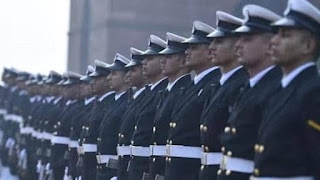
In a significant move towards embracing indigenous military traditions and shedding colonial-era remnants, the Indian Navy has sanctioned the adoption of ethnic attire like kurta-pyjamas within naval mess premises. This decision, spurred by government directives, aims to promote cultural authenticity.

The initiative, discussed during the naval commanders’ conference led by Admiral R Hari Kumar, underscores the recognition of kurta-pyjamas as a ‘national civil dress’. According to guidelines, officers are permitted to wear solid-colored kurtas with cuff sleeves extending just above the knee, paired with slim pyjamas featuring an elastic waistband and side pockets. Female officers are given similar instructions, with the option of kurta-churidar or kurta-palazzo combinations.

It’s important to note that these regulations pertain solely to informal or casual gatherings within messes and institutes, excluding warships or submarines. Previously, the wearing of kurta-pyjamas was strictly prohibited for male personnel and guests in Navy messes, as well as in establishments of the Army and the Indian Air Force.

While the move aligns with Prime Minister Modi’s call for “freedom from slavery mentality,” some veterans, like Former Chief Admiral Arun Prakash, have expressed reservations. Prakash believes emphasizing the ‘ghulami ki virasat’ (legacy of slavery) is unnecessary and could cast doubt on the patriotism of post-Independence generations of Indian Navy personnel.

In addition to attire changes, the Indian Navy is also undertaking the ‘Indianisation’ of rank names for sailors, further emphasizing its commitment to embracing indigenous identity and traditions.

CASIC Breaks Maglev Speed Record in Low-Vacuum Tube Tests

0

The China Aerospace Science and Industry Corporation (CASIC) has announced a breakthrough in its maglev train technology, surpassing its previous speed record in tests within a 2 km low-vacuum tube. Although the exact speed achieved remains classified, CASIC hailed it as a significant advancement, marking the first stable levitation of their ultra-fast hyperloop train in such conditions. With maglev propulsion and reduced air resistance in a low-vacuum environment, the train could soon rival plane speeds, according to the South China Morning Post. CASIC stated that the recent test not only set a new speed record but also validated crucial technologies, paving the way for even faster speeds up to 1,000 km/hr, exceeding commercial aviation. Chief designer Mao Kai emphasized the challenges and complexities of the project, highlighting the successful interaction between the vehicle, tube, and track, ensuring steady levitation and safety controls. These achievements enhance the technical maturity of the system, laying the groundwork for future higher-speed tests and the development of a national transport network. Moreover, CASIC’s department within the China National Space Administration is also involved in advancing the country’s next-generation commercial aerospace electromagnetic launch systems.