
Home Blog Page 5

Google Gemma 4 arrives with a bigger push toward efficient open AI

Google’s Gemma line has always targeted developers who want strong AI capabilities without the heavy cost and complexity associated with frontier-scale closed systems. With Gemma 4, Google is clearly leaning harder into that promise by combining better reasoning, longer context windows, and wider deployment flexibility inside a more accessible open-model framework.

What Gemma 4 is

Gemma 4 is the newest generation in Google’s open-weight AI model family. It is designed for developers, researchers, and businesses that want to run advanced language and multimodal workloads with more control over fine-tuning, hosting, and customization.

The broader pitch is straightforward: smaller and more efficient models should no longer mean weak performance. Google is presenting Gemma 4 as a family that can scale from edge hardware to enterprise workflows while still remaining practical to deploy.

“The real importance of Gemma 4 is not just raw capability. It is Google’s attempt to make capable AI more deployable in the real world.”

Model lineup

Google has introduced Gemma 4 in multiple sizes so developers can choose a model that matches their compute budget and latency needs. The smaller variants are aimed at efficient inference on constrained hardware, while the larger releases are built for heavier reasoning, long-context work, and advanced customization.

VariantPositioningBest fit
E2B / E4BCompact models optimized for lighter hardware and faster inference.On-device assistants, mobile apps, edge tasks.
26B MoEMixture-of-experts design balancing performance and efficiency.Production workloads needing lower cost per task.
31B DenseHigher-end dense model for heavier reasoning and benchmarking.Research, coding, complex enterprise use.

Key features

One of Gemma 4’s biggest attractions is multimodal capability. Google positions the family for handling not only text, but also richer inputs such as images and more structured context, which makes the models more useful for document understanding, automation tools, and interface-aware AI workflows.

Another major upgrade is context length. Long context windows make Gemma 4 more suitable for summarizing large files, reviewing code repositories, and maintaining continuity in extended conversations without constant truncation.

Google is also emphasizing support for tool use, structured prompting, and agent-style tasks. That matters because many current AI deployments are no longer simple chatbots; they are assistants expected to reason, call tools, and produce more reliable multi-step outputs.

Why it matters

The timing is important. Open-weight AI is becoming a serious strategic layer for startups, enterprises, and independent developers who want more ownership over costs, privacy, and deployment choices. Gemma 4 gives Google a stronger answer in that race.

There is also a hardware angle. If developers can run capable models on a single GPU or even on smaller local setups, then the economics of experimentation improve dramatically. That can widen adoption among app developers, research teams, and businesses that do not want a purely API-dependent strategy.

Use cases

Gemma 4 can fit a broad range of products. A smartphone assistant could use a smaller variant for local summarization, while a legal-tech platform could use a larger model for document review, extraction, and reasoning over long case files.

For content teams, the model family is also relevant for drafting, multilingual workflows, classification, and code-assisted publishing tools. The combination of open access and deployment flexibility makes it especially attractive for teams that want to build internal AI systems rather than depend entirely on black-box services.

Availability

Google has made Gemma 4 available across its own developer ecosystem and cloud stack, while also supporting broader access through familiar AI distribution channels. That gives developers multiple on-ramps, from experimentation and local testing to full production deployment.

In practical terms, that means Gemma 4 is less of a research announcement and more of a shipping platform play. Google wants developers to build with it now, not simply admire it on paper.

Vaazha 2 Sets New Benchmark: Emerges as One of Malayalam Cinema’s Biggest Openers of 2026

“Vaazha 2: Biopic of a Billion Bros”, the much‑anticipated sequel to the cult youth‑centric comedy, has redrawn the Malayalam box‑office map with a scorching opening and remarkable growth in its first three days. Starring Hashir H and Ajin Joy, the film is not only riding on the nostalgia of the original but has also carved its own identity as one of the highest‑grossing Malayalam releases of 2026 so far, both in India and overseas.


A Record‑Shattering Start

The film debuted on a massive scale, opening to one of the biggest audience responses for a Malayalam film this year. On Day 1, “Vaazha 2” raked in approximately ₹4.75 crore net in India, with a gross of around ₹5.6 crore, earned from over 1,100 shows and an average occupancy of 64%. This performance placed it as the second‑largest opening for a Mollywood film in 2026, right behind the year’s biggest Malayalam release.

The momentum continued on Day 2, as the film crossed ₹10 crore net in India within two days and took its India gross to around ₹11.5–11.8 crore, showcasing strong audience turnout and repeat viewership. By Day 3, it added another ₹7 crore net, pushing the India net collection to roughly ₹17.2 crore and the India gross to about ₹19.7–20 crore. The film has also already crossed the 7 lakh footfall mark in just its first two days, a clear indicator of its popularity among the youth.


Overseas Crushes the Box Office

While the film was always expected to do well in Kerala, its overseas performance has pleasantly surprised trade analysts. “Vaazha 2” has registered strong numbers in the Gulf countries, Australia, Singapore, and other Malayalam‑friendly markets, contributing significantly to its global tally.

On Day 2 itself, the overseas gross stood at around ₹8.5–10 crore, with cumulative overseas collections reaching ₹13–24 crore depending on the tracker. By the end of Day 3, the film’s worldwide gross is estimated at ₹33–44 crore, with India accounting for roughly ₹19–20 crore and the rest coming from international markets.

If the film continues to hold reasonably on weekdays and maintains its weekend momentum, experts believe it can comfortably cross the ₹50 crore gross mark, making it one of the most profitable Malayalam ventures of the year.


Budget and Profitability

Reports suggest that the film was produced on a relatively modest budget of around ₹10 crore, though this figure has not been officially confirmed by the makers. Even with this conservative estimate, the film has already recovered most of its production cost from theatrical rights and screen revenue in just the first two days, turning it into a near‑Hit or above‑average commercial success at this early stage.

The territorial breakdown further highlights its strength. Kerala alone has contributed approximately ₹17–18 crore gross by Day 3, proving that the franchise still enjoys a strong emotional connect with its core audience.


Why Vaazha 2 Is Resonating with Audiences

Several factors have contributed to “Vaazha 2’s” box‑office triumph.

  • Franchise Loyalty: The first film, “Vaazha: Biopic of a Billion Boys”, had already built a loyal fanbase. The sequel’s marketing tapped into that nostalgia while introducing fresh characters and storylines, creating a sense of both familiarity and excitement.
  • Youth‑Focused Narrative: The film’s college‑campus setting and bromance‑driven storyline have struck a chord with the younger generation, driving multiplex and weekend footfalls. The humour is relatable and timely, making it a perfect mix of comedy and emotion.
  • Strong Word‑of‑Mouth: The film’s box‑office trajectory has been impressive, with a 33% jump in collections on Day 3 compared to Day 2. This indicates that audiences are not only watching the film but also recommending it to others, which is crucial for sustained long‑term performance.

A New Chapter in Malayalam Cinema

“Vaazha 2: Biopic of a Billion Bros” is more than just a commercial success; it represents a significant shift in Malayalam cinema’s landscape. The film’s strong worldwide performance demonstrates that youth‑oriented, character‑driven comedies can achieve both critical acclaim and commercial triumph.

With its robust opening, steady growth, and loyal fanbase, “Vaazha 2” has firmly established itself as one of the top Malayalam releases of 2026. As the film continues to screen, it will be interesting to see how it shapes the future of franchise‑based releases in the Malayalam film industry.

Vivo V70 FE India Launch: Full Specs, Price, Features & Everything You Need to Know

Vivo launched the V70 FE in India on April 1, 2026, bringing flagship-level features to the mid-range segment with a groundbreaking 7000mAh battery and 200MP camera. Starting at Rs 37,999, this slim powerhouse targets gamers, photographers, and power users, available from April 9 on Flipkart, Amazon, and Vivo’s e-store.

Complete Launch Timeline

Announced after teasers from late March, the V70 FE debuted via a virtual event, confirming pre-booking with instant discounts. Color options include Monsoon Blue, Northern Lights Purple, and possibly a black variant later. Its IP68/IP69-rated body (7.59mm thick, 200g) features Darkness Glow Technology—a UV-activated luminescent back that glows in dim conditions for a premium aesthetic. Bank offers: 10% cashback (ICICI/HDFC), no-cost EMI up to 12 months, exchange bonuses up to Rs 5,000, and free Vivo TWS 3e earbuds worth Rs 1,499.

Vivo launched the V70 FE in India on April 1, 2026, bringing flagship-level features to the mid-range segment with a groundbreaking 7000mAh battery and 200MP camera. Starting at Rs 37,999, this slim powerhouse targets gamers, photographers, and power users, available from April 9 on Flipkart, Amazon, and Vivo’s e-store.

Complete Launch Timeline

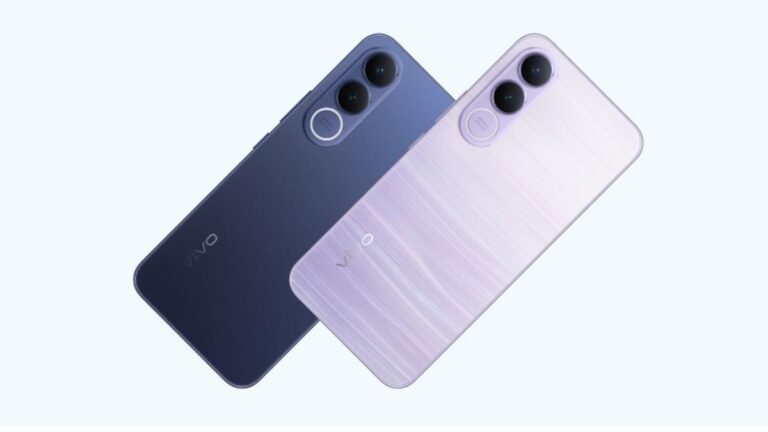
vivo V70 FE smartphones 

Announced after teasers from late March, the V70 FE debuted via a virtual event, confirming pre-booking with instant discounts. Color options include Monsoon Blue, Northern Lights Purple, and possibly a black variant later. Its IP68/IP69-rated body (7.59mm thick, 200g) features Darkness Glow Technology—a UV-activated luminescent back that glows in dim conditions for a premium aesthetic. Bank offers: 10% cashback (ICICI/HDFC), no-cost EMI up to 12 months, exchange bonuses up to Rs 5,000, and free Vivo TWS 3e earbuds worth Rs 1,499.

This multi-angle shot reveals the Vivo V70 FE’s sleek blue and white finishes, emphasizing the slim bezels, quad-curved edges, and prominent camera island.

Pricing and Storage Options

Competitively priced for its specs, the V70 FE undercuts rivals like the Realme GT 7 and iQOO Z10.

VariantPrice (Rs)RAM + StorageBest For
8GB + 128GB37,999Entry-levelEveryday use
8GB + 256GB40,999BalancedMultitasking
12GB + 256GB44,999PremiumGaming/Pro apps

Display and Build Quality

A 6.83-inch 1.5K (2800×1260) OLED panel with 120Hz adaptive refresh rate, 1,900 nits HBM brightness, HDR10+, and 3,840Hz PWM dimming ensures smooth scrolling and eye comfort. Protected by Schott Xensation glass, it supports Wet Touch 2.0 for gloved/underwater use. Dual stereo speakers with 400% volume boost and spatial audio enhance media. Security via ultrasonic in-display fingerprint and face unlock.

Processor and Software

MediaTek Dimensity 7360-Turbo (4nm, octa-core up to 2.8GHz) with Mali-G610 MC4 GPU delivers AnTuTu scores over 700,000. Expanded RAM up to 12GB virtual + UFS 3.1 storage ensures lag-free performance. Runs OriginOS 6 on Android 16, promising 3 major OS upgrades and 6 years of security patches—best-in-class longevity. Gaming perks: HyperSense haptics, GT Mode, and frame interpolation up to 120fps.

Advanced Camera System

Vivo V70 FE camera 

The star is the 200MP primary (1/1.56-inch Samsung S5KHP3SP, f/1.88, OIS, 16-in-1 pixel binning for 12.5MP shots) paired with 8MP ultrawide (f/2.2, 120° FOV, macro). Dual Aura Lights (Type-C) aid low-light portraits. Front: 32MP autofocus (f/2.45). AI suite includes Four-Season Portrait (dynamic lighting), Magic Erase, 30x AI zoom, Document Mode, and ZEISS-tuned bokeh. Records 4K@60fps rear/4K@30fps front with gyro-EIS; excels in underwater videography thanks to IP69.

Prominently featuring the 200MP OIS module, this image underscores Vivo’s focus on pro-grade imaging with OriginOS enhancements and glowing effects.

Battery and Charging

Massive 7,000mAh silicon-carbon battery (lightest in class) offers 2-day usage, retaining 14% after a 16-hour PCMark loop. 90W FlashCharge reaches 50% in 25 minutes (0-100% in 60 mins), with 5-layer safety and bypass mode for gaming. Supports reverse wired charging.

Connectivity and Extras

5G (13 bands), Wi-Fi 6E, Bluetooth 5.4, NFC, IR blaster, and USB-C 2.0. Dual SIM, expandable storage via hybrid slot. Additional perks: X-Axis linear motor, 24-bit Hi-Res audio, and zero-liquid discharge tech for eco-friendliness.

Ranbir Kapoor Divine Avatar as Lord Rama Unveiled: ‘Ramayana’ Teaser Drops on Hanuman Jayanti, Sparking Epic Hype

In a cinematic moment that has sent waves of excitement across India and the global diaspora, the much-awaited first glimpse of Namit Malhotra’s Ramayana—titled “Rama”—was officially released today, April 2, 2026, on the auspicious occasion of Hanuman Jayanti. Starring Ranbir Kapoor in the iconic role of Lord Rama, the teaser offers a breathtaking introduction to director Nitesh Tiwari’s ambitious two-part epic, promising to redefine mythological storytelling on the big screen.

A Grand First Glimpse of Maryada Purushottam

Clocking in at approximately 2 minutes and 38 seconds, the teaser is a visual masterpiece that blends grandeur, emotion, and scale. It opens with Ranbir Kapoor’s regal entry into Ayodhya, showered in flowers as he embodies the ideal king. Viewers get multiple evocative glimpses of Rama’s journey: from his poised, divine presence in royal robes and ornate gold jewelry during coronation scenes to his warrior avatar wielding a mighty bow in battle against demons and giants.

Heartfelt moments from the exile (vanvaas) in the forests of Panchavati with Sita and Lakshmana add emotional depth, while a standout sequence shows Rama in a boat, slowly turning with serene intensity when his name is called—already being hailed as a goosebumps-inducing highlight. The teaser builds to a tantalizing tease of Yash as the formidable Ravana, heightening the epic Rama-Ravana confrontation.

The music, a powerful collaboration between Oscar-winners Hans Zimmer and A.R. Rahman (their first joint project), elevates every frame with an electrifying score that feels both grand and introspective.Ranbir Kapoor channels quiet strength, grace, and divinity, looking every bit the “conscience keeper of billions” as he described the character. Fans and early viewers are calling his portrayal “regal,” “immersed,” and “fire,” with many noting how he has fully embodied the role’s essence of duty, sacrifice, and righteousness.

Star-Studded Cast and Monumental Production

The teaser also teases key cast members:

  • Sai Pallavi as the graceful Sita
  • Ravie Dubey as Lakshman
  • Sunny Deol as the mighty Hanuman (with his role expanding in Part 2)

Yash’s menacing glimpse as Ravana has already left audiences thrilled about the clash of titans.

Backed by Namit Malhotra’s Prime Focus Studios and DNEG (an eight-time Oscar-winning VFX powerhouse), in association with Yash’s Monster Mind Creations, the film is shot for IMAX with jaw-dropping visuals. The two-part saga hits cinemas worldwide with Part 1 on Diwali 2026 and Part 2 on Diwali 2027. Written by Shridhar Raghavan, it aims to bring the timeless epic to life like never before.

Fan and Celebrity Reactions: Praise, Hype, and a Few Notes

Early screenings in Los Angeles and New York (with Ranbir, Nitesh Tiwari, and Namit Malhotra in attendance) generated massive buzz. Alia Bhatt called it “out of this world,” while OG Sita Dipika Chikhlia praised it as “grand and beautiful.” Social media is flooded with “Jai Shri Ram” chants, comparisons to global hits like RRR, and declarations that Indian cinema is entering a new era.

The VFX has drawn mixed feedback—many laud the ambition, cosmic scale, and stunning elements like the Pushpak Vimaan, but some note a few sequences (especially action) feel slightly uneven or “AI-like” in polish. Overall, the consensus is overwhelmingly positive: this is a landmark glimpse that has restored faith in big-screen mythological epics.

Google Finally Lets You Change Your Gmail Username in 2026 – A Complete Guide

For over two decades, your Gmail address was treated like a permanent digital ID—you created it once and had to live with it forever. But now Google has changed that. In 2026, Google has quietly rolled out a new feature that lets you change your Gmail username (the part before “@gmail.com”) directly inside your existing Google Account, without losing your emails, Drive files, Photos, or any other service data.

This update is currently available to all personal Google Account users in the United States, and Google has confirmed that it will gradually expand to other regions, including India, in the coming months.


What the Gmail username change feature actually does

The new feature allows you to replace your old @gmail.com address with a new one, while keeping your account and all its data intact. Google doesn’t delete your old email; instead, it turns it into an alias (also called an alternate email), so:

  • You can still sign in with either the old or the new username.
  • Any emails sent to the old address still reach your inbox.
  • Your Drive, Photos, Calendar, YouTube, and other services keep using the same account—nothing gets reset.

In short, you’re upgrading your identity, not migrating to a new account.


Limits and restrictions you should know

Google has put some clear rules in place to avoid abuse and keep accounts stable.

  • You can change your Gmail username once every 12 months.
  • You can only change your Gmail address up to three times in the lifetime of a single account.
  • The new username must be an available @gmail.com address that is not already in use or recently deleted.
  • The feature is initially limited to personal Gmail accounts; if your email is managed by a school, workplace, or organization, you’ll need to contact the admin to change it.

Step‑by‑step: How to change your Gmail username

These steps assume you’re using the desktop web version (which gives the clearest UI for this change). If you’re on Android or iOS, you can still reach the same Account settings through the Google app or Gmail app.

Step 1: Sign in to your Google Account

  • Open your browser and go to myaccount.google.com.
  • Sign in with the Gmail account whose username you want to change.

Step 2: Open “Personal info”

  • On the left‑hand menu, click Personal info.
  • Under the Contact info section, look for the Email field that shows your current Gmail address (ending with @gmail.com).

Step 3: Click “Edit” or “Change email”

  • If you’re eligible, you’ll see an Edit or Change email option next to your Gmail address.
  • Click it to open the email‑change flow.

Step 4: Enter your new Gmail username

  • In the text box, type your desired new username (for example: youroldname → yournewname).
  • Make sure the suggested address (e.g., yournewname@gmail.com) is available and not already taken.

Step 5: Confirm and verify

  • Click Save or Continue.
  • Google may ask you to verify your identity via:
    • A confirmation email sent to your current Gmail.
    • SMS or Google Authenticator, if two‑factor is enabled.
  • Open the confirmation email or code, follow the link, and approve the change.

Step 6: Finalize the change

  • Once confirmed, your new username becomes your primary Gmail address.
  • Your old address now works as an alternate email of the same account.
  • You can still sign in with either oldname@gmail.com or newname@gmail.com, and both will open the same inbox.

What happens to your old email after the change

Many people worry that changing their username will “break” old links or subscriptions. That’s where Google’s alias system helps.

  • Old emails and subscriptions
    • Any app, website, or service that uses your old Gmail still works.
    • When those services send emails to the old address, they still land in your inbox.
  • Sending emails
    • By default, you’ll send mail from your new address, but you can usually set your old address as “Send mail as” in Gmail settings if you want to keep it visible externally.
  • Contacts and friends
    • Your contacts don’t need to update anything. They can keep using the old address when emailing you.

Why this update matters for users

Over the years, Gmail accounts have become deeply tied to our lives: work, school, banking, social media, and more. Before this feature, changing an outdated or unprofessional Gmail meant:

  • Creating a brand‑new account.
  • Manually moving years of emails, files, and subscriptions.
  • Risking broken links, lost two‑factor codes, or disconnected services.

With the new username change feature, you can:

  • Clean up your digital identity (e.g., coolboy2005 → johndeo).
  • Use a more professional email for job applications, freelance work, or business.
  • Keep access to your old data without migrating or risking data loss.

Availability and when it will come to India

As of April 2026, Google has officially enabled the username‑change option for all personal Gmail accounts in the United States.

  • If you’re in the US and eligible, you’ll see the Change email / Edit username toggle under your email in the Account settings.
  • For users in India and other regions, Google has not announced a fixed date yet but has signaled that the feature will roll out gradually over time.

Until your region is enabled, that option may be missing or grayed out even if you’re signed in on the latest browser or app. To check if it’s live for you:

  • Open myaccount.google.com → Personal info → Email.
  • If there’s no “Change email” or “Edit” option, the feature is not yet available for your account location.

Air India Express Diverts to Lucknow After Mid‑Air Smoke Scare; All Passengers Safe

0

An Air India Express flight bound for Delhi from Bagdogra carried out an emergency landing at Lucknow’s Chaudhary Charan Singh International Airport on March 30, 2026, after the crew reported signs of smoke or fumes in the cockpit panel area. The incident triggered a precautionary evacuation, but all 148 passengers and crew emerged unharmed.

Flight details and mid‑air alert

The flight, operating as IX‑1523, was cruising at an altitude of about 36,000 feet when the pilots detected a smoke‑like odour or fumes originating from the avionics or instrument panel region. As a standard safety procedure, the crew declared a priority emergency, issued a distress call, and automatically deployed oxygen masks in the cabin. Several passengers described moments of panic as the masks fell and the aircraft began a rapid descent.

Emergency landing and evacuation

Air traffic control immediately cleared the jet for an emergency landing at the nearest major airport—Lucknow. The airport declared a full‑scale emergency, with firefighting units, ambulances, and security teams standing by on the runway. The aircraft touched down safely at around 5:17 pm, and ground personnel carried out a swift evacuation; there were no reported injuries or serious medical issues among passengers.

Aircraft grounded, probe underway

Post‑landing inspections revealed no visible fire or major external damage, but the aircraft remains grounded for a detailed technical review. Engineers and airline safety officials are examining the avionics systems, sensors, and cockpit environment to pinpoint whether the alert was caused by a genuine fault, sensor error, or other technical issue. The Directorate General of Civil Aviation (DGCA) is also expected to review the incident as part of routine safety oversight.

Realme 16 5G India Launch: Features, Battery, Camera & Price Explained

Realme 16 5G is set to launch in India on 2 April 2026, and the company is branding it as “India’s first Selfie Mirror Phone.” The device is built for users who want strong selfie performance, long battery life, and smooth 5G experience at a budget‑friendly price.

From social‑media creators to daily‑use smartphone buyers, Realme 16 5G aims to balance battery endurancedisplay quality, and front‑camera features without crossing into flagship territory.


Design and Build: Slim Body, Big Battery

Despite packing a 7,000 mAh battery, the Realme 16 5G keeps a relatively slim profile at about 158.3 × 75.1 × 8.1 mm and a weight of around 183 g. The front uses a glass‑like panel, while the frame and back are plastic, which helps keep the phone light and cost down.

The phone comes in two color options: White Swan and Black Cloud, both with a glossy, gradient‑style finish that gives it a premium look on the outside. Top variants are expected to come with IP68/IP69‑grade water and dust resistance, which adds durability for everyday Indian use.


Display: 6.57‑inch 120 Hz AMOLED

Realme 16 5G features a 6.57‑inch AMOLED display with FHD+ resolution (1080 × 2372), offering sharp text and vibrant colors for videos, gaming, and social‑media scrolling. The screen supports a 120 Hz refresh rate, making animations and transitions noticeably smoother.

Additional display features include 1B colors2160 Hz PWM dimming for reduced eye strain in low light, and peak brightness of up to around 4,500 nits. This makes the display one of the standout features, especially for a phone likely to be priced under ₹20,000.


Performance: Dimensity 6400 Turbo with 5G

The phone runs on the MediaTek Dimensity 6400 Turbo (6 nm) chipset, an octa‑core processor with 2× 2.5 GHz Cortex‑A76 and 6× 2.0 GHz Cortex‑A55 cores, paired with Mali‑G57 MC2 graphics. This setup handles everyday tasks, light gaming, and multitasking with ease.

Realme 16 5G will be available in two key RAM‑storage options:

  • 8 GB + 256 GB
  • 12 GB + 256 GB

Both variants use UFS 2.2 storage, which is faster than older eMMC standards, and there is a microSDXC slot (shared with SIM 2) for extra storage expansion.

Software‑wise, the phone ships with Android 16 and Realme UI 7.0, giving users access to the latest features, cleaner UI tweaks, and relatively long‑term software support.


Cameras: 50 MP Dual Setup with Selfie Mirror

The rear camera system centers around a 50 MP main sensor (f/1.8) with PDAFlaser autofocus, and a color spectrum sensor. This setup delivers balanced daylight shots and decent low‑light performance, with features like HDR and AI scene optimization.

Video recording on the rear is limited to 1080p at 30 fps with gyro‑EIS for basic stabilization. The front camera is also 50 MP, capable of capturing 1080p video at 30/60 fps, making it ideal for Reels, Shorts, and TikTok content.

The key highlight is the “Selfie Mirror” hardware mirror on the rear. Instead of relying only on the screen preview, users can frame their shot using this small reflective strip while still using the high‑resolution 50 MP front camera. This helps with better lighting, angles, and overall composition for social‑media content.


Battery and Charging: 7,000 mAh with 60 W Fast Charging

The 7,000 mAh silicon‑carbon (Si/C)‑based Li‑Ion battery is one of the largest in the mid‑range segment. With moderate usage—messaging, browsing, and some video streaming—the phone can last 1.5–2 days on a single charge. Heavy gaming or continuous video playback may bring it closer to a full day.

For charging, Realme 16 5G supports 60 W wired fast charging and 45 W PPS charging, which helps top up the big battery quickly. The phone also supports 13.5 W reverse wired charging, so you can charge accessories like earphones or even a friend’s device when needed.


Connectivity and Other Features

Realme 16 5G supports 5G (NSA/SA) for future‑proof network coverage in India. It also includes dual‑band Wi‑Fi 5Bluetooth 5.3 with aptX HD and LHDC support for high‑quality wireless audio, and satellite navigation (GPS, GALILEO, GLONASS, BDS, QZSS) for accurate location tracking.

Additional features include:

  • NFC (region‑dependent)
  • IR blaster for controlling TVs, ACs, and other home devices
  • USB‑Type‑C 2.0 with OTG support
  • Stereo speakers for better multimedia playback
  • Ultrasonic in‑display fingerprint sensor for fast and secure unlock

There is no 3.5 mm headphone jack, so users will need USB‑C earphones or Bluetooth headphones.


Launch Date and Expected Price in India

Realme has officially confirmed that the Realme 16 5G will launch in India on 2 April 2026. Teasers have highlighted the 7,000 mAh batterySelfie Mirror, and 5G‑ready performance aimed at social‑media‑driven users.

Though the exact price is not yet announced, Indian tech trackers suggest:

  • 8 GB + 256 GB variant: around ₹18,000–₹20,000
  • 12 GB + 256 GB variant: slightly above this range

At this price, Realme 16 5G will compete directly with the Redmi Note 14 seriesXiaomi 14 Lite, and Samsung Galaxy M series phones in India’s mid‑range 5G segment.


Who Should Buy Realme 16 5G?

Realme 16 5G is best suited for:

  • Students and young professionals who use social media, YouTube, and gaming heavily.
  • Content creators who focus on Reels, Shorts, and TikTok and need strong selfie and front‑camera performance.
  • Budget buyers who want a 5G phone with 120 Hz AMOLED display7,000 mAh battery, and good overall features, but want to stay under ₹20,000.

Who Is Yash Negi? Dehradun Free Fire Creator “The Star” Rapidly Growing on YouTube and Instagram

The Indian gaming community continues to grow rapidly, and new creators are emerging from different parts of the country. One such creator who has been gaining attention recently is Yash Negi, popularly known online as “The Star.”

The young creator from Dehradun, Uttarakhand has been building a strong fanbase through his Free Fire content on YouTube and Instagram, attracting thousands of gaming fans who enjoy competitive gameplay and entertaining moments.

A Young Creator from Dehradun

Born on January 1, 2005, Yash Negi represents the new generation of Indian gaming creators who started their journey from smaller cities but are now reaching audiences across the country through digital platforms.

With consistent uploads and engaging gameplay, he has managed to build a loyal gaming community online.

400K Subscribers on YouTube

Yash Negi runs a YouTube channel called “THE STAR”, where he mainly shares content related to the popular battle royale game Free Fire.

The channel has already crossed 400,000 subscribers, a milestone that highlights his growing popularity in the gaming space. His videos often include gameplay highlights, skill moments, and entertaining gaming sessions that attract viewers from across India.

YouTube Channel:
www.youtube.com/@THESTAR-yt07

Many fans follow the channel for Free Fire strategies, exciting gameplay clips, and engaging gaming content.

Growing Fanbase on Instagram

Apart from YouTube, the creator is also gaining traction on Instagram. His account currently has around 73,000 followers, where he shares gaming reels, highlights, and updates with his audience.

Instagram Profile:
https://www.instagram.com/thestaryt_o7/

Short-form gaming content has helped him reach even more viewers, especially younger audiences who enjoy quick gaming clips and entertaining moments.

Free Fire Creators Rising in India

Mobile gaming has become one of the fastest-growing digital entertainment sectors in India, and Free Fire creators play a huge role in building the online gaming community.

Creators like Yash Negi are helping keep the game’s fanbase active by regularly sharing gameplay content and interacting with followers.

A Rising Name in the Gaming Community

With 400K YouTube subscribers and a growing Instagram audience, Yash Negi, also known as The Star, is gradually becoming a recognized name among Free Fire fans.

As India’s gaming ecosystem continues to expand, creators from cities like Dehradun are proving that talent and consistency can help anyone build a strong digital presence.

If his growth continues at the current pace, The Star could soon become one of the notable gaming creators to watch in India’s mobile gaming community.

Two Indian LPG Carriers Safely Cross Strait of Hormuz, Delivering Vital Cooking Gas Amid West Asia Tensions

0

New Delhi, March 28, 2026 – In a major boost to India’s energy security, two Indian-flagged LPG (liquefied petroleum gas) tankers, Jag Vasant and Pine Gas, have successfully transited the volatile Strait of Hormuz and are now heading to domestic ports with nearly 93,000 tonnes of cooking gas – enough to meet roughly one day’s national demand.

The vessels crossed the narrow waterway on Monday, March 23, sailing in close formation near Iran’s coastline – a route now commonly used by ships to ensure safe passage through the region amid ongoing geopolitical disruptions in West Asia. Ship-tracking data and the Ministry of Ports, Shipping and Waterways confirmed the safe transit, with Jag Vasant carrying 33 Indian seafarers and Pine Gas carrying 27. The tankers are expected to dock at Indian ports, including Kandla and New Mangalore, between March 26 and 28.

Strategic Chokepoint Under Pressure The Strait of Hormuz, which connects the Persian Gulf to the Gulf of Oman and the Arabian Sea, handles a significant portion of the world’s oil and gas trade. Recent escalations in the West Asia conflict had stalled multiple Indian-flagged vessels west of the strait, raising concerns over LPG supplies for Indian households.

These two carriers are the latest in a series of successful transits. Earlier shipments, including those on MT Shivalik and MT Nanda Devi, had already reached Indian shores with similar volumes. According to government officials, around 20 Indian-flagged ships remain in the area, and efforts are underway to secure safe passage for all.

Special Secretary in the Ministry of Ports, Shipping and Waterways, Rajesh Kumar Sinha, clarified that no formal permission is required to transit the international strait. “It is an international strait. Every country has a right of freedom of navigation through that strait,” he stated, adding that safety assessments guide the timing of movements.

Relief for Domestic LPG Supply India relies heavily on imported LPG to meet household cooking needs. The successful arrival of these tankers comes as a timely relief, especially after reports of temporary shortages and price concerns in some states. Prime Minister Narendra Modi recently assured Parliament that India has built robust strategic petroleum reserves and diversified supply sources to weather such disruptions.

The Jag Vasant has already begun unloading operations at Gujarat’s Kandla port, while Pine Gas is expected shortly. This marks continued progress in resuming energy flows despite the challenges.

India’s Maritime Vigilance The Indian Navy and shipping authorities have been closely monitoring the situation, though official statements confirm that the vessels were not directly escorted through the strait itself. The focus remains on the safety of Indian crew members and ensuring uninterrupted energy imports from the Gulf region.

Dell XPS 14 In‑Depth Review: Should You Buy This Premium 14‑Inch Laptop?

Dell XPS 14 is a premium, compact Windows laptop built for creators and power users who want strong performance, a gorgeous screen, and solid portability in a sleek metal body. It’s now positioned as an “AI‑ready” Copilot+ PC, which means it can handle on‑device AI‑powered tasks while still feeling very much like a classic high‑end XPS machine.

What the XPS 14 actually is

The Dell XPS 14 is a 14‑inch (more precisely 14.5‑inch) clamshell laptop that sits between the smaller XPS 13 and larger XPS 16. Dell calls it “AI‑ready” because it ships with Intel’s latest Core Ultra “Panther Lake”‑series processors, which include a Neural Processing Unit (NPU) for running local AI features like Microsoft Copilot more efficiently.

In simple terms: it’s a supremely portable but very capable Windows laptop that’s tuned for creative work—photo and video editing, coding, content creation, and even light gaming—while still being light enough to carry around all day.


Design and build quality

The XPS 14 keeps the minimalist, minimalist‑graphics‑on‑the‑lids‑only look that Dell has made famous. The chassis is typically machined aluminum, with clean lines, a compact footprint, and a weight around 1.68–1.74 kg depending on display and battery, which feels light for what it packs.

Inside, the keyboard deck is minimal and sleek, with a large, glass‑covered touchpad that reviewers describe as big, responsive, and very high‑quality for everyday use. The machine also reintroduces physical function keys (no more touchbar‑style strip), which many users prefer for shortcuts and quick toggles.


Display options and screen quality

The XPS 14 gives you a choice between high‑res IPS and OLED panels, both in the 14‑to‑14.5‑inch range. Common configurations include:

  • A 1920×1200 (FHD‑plus) non‑touch IPS panel with up to 120 Hz refresh rate for smoother scrolling and basic HDR.
  • A 3200×2000 (3.2K) OLED touchscreen with 120 Hz refresh rate, very deep blacks, and vivid colors, aimed at creatives who care about accuracy.

What this means in practice: the OLED model is ideal for photo/video work, watching movies, and just enjoying rich, punchy visuals, while the 1200p IPS model generally trades a bit of color drama for a bit more battery life and lower price.


Performance and what it can handle

The XPS 14 is powered by Intel’s Core Ultra 5 / Ultra 7 chips (Ultra 300‑series on newer 2026 models), with 8–16 cores depending on the SKU. Higher‑end models often pair an Intel Core Ultra 7 155H or 355 with up to 32 GB of fast LPDDR5x memory and 1–2 TB NVMe SSD storage, which is plenty for heavy multitasking and creative apps.

In real‑world use, this translates to:

  • Smooth handling of photo editing (Photoshop, Lightroom), 1080p–1440p video editing, and multiple browser tabs without stutter.
  • Enough muscle for light‑to‑moderate gaming if you pick a variant with an NVIDIA RTX 4050 discrete GPU (on some higher‑end configs).
  • Strong AI‑assisted workflows thanks to the NPU and integrated Intel Arc graphics, which run local Copilot‑style features efficiently.

Battery life and cooling

Battery life is one of the XPS 14’s strong points. Reviews show around 10–12 hours of mixed use on the 1200p IPS model and roughly the same or slightly less on OLED, which is impressive for this class of ultraportable. Some marketing materials even push up to around 31 hours of “typical” battery life claims, though real‑world use is usually closer to those 10‑hour figures.

Dell redesigned the cooling system from earlier XPS‑14‑style models, so the laptop can sustain bursts of CPU/GPU load without getting excessively hot or noisy. It’s not a gaming‑laptop thermal monster, but under normal creative and office workloads it stays quiet and comfortable on the lap.


Audio, ports, and everyday usability

The XPS 14 steps up the audio game with quad‑speaker setups in many configurations, which reviewers note sound richer and more balanced than most slim Windows laptops. That makes it decent for watching movies, video calls, or listening to music without needing external speakers all the time.

On the port side, you get a mix of:

  • USB‑C (Thunderbolt‑style) ports for fast data, charging, and external displays.
  • HDMI or similar video output on some SKUs.
  • Wi‑Fi 7 and Bluetooth support on newer 2026 models, future‑proofing for fast networks and peripherals.

This means you can easily connect external monitors, fast storage, and docking‑style setups, while still keeping the machine slim enough for travel.


Who should buy the XPS 14

The XPS 14 is best suited for:

  • Creatives (photo/video editors, designers, content creators) who want a compact powerhouse with a great screen and good battery life.
  • Professionals and business users who value a premium build, clean Windows experience, and AI‑ready features like Copilot+ for writing, coding, and productivity.
  • Anyone who wants a lighter alternative to larger workstations or 15–16‑inch laptops but doesn’t want to sacrifice much performance or display quality.

It sits at a premium price, often comparable to a MacBook Pro‑class device, so it’s worth it if you care about the combination of screen, build, and AI‑ready performance rather than just raw benchmarks.